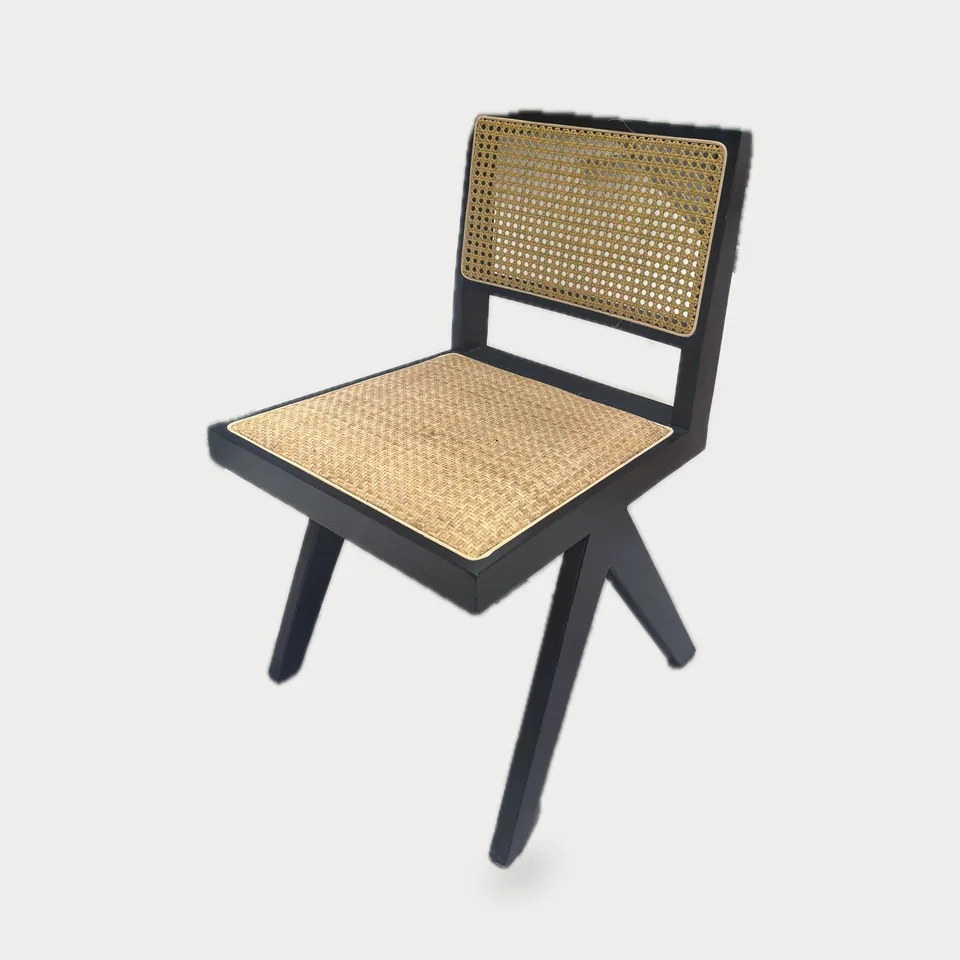
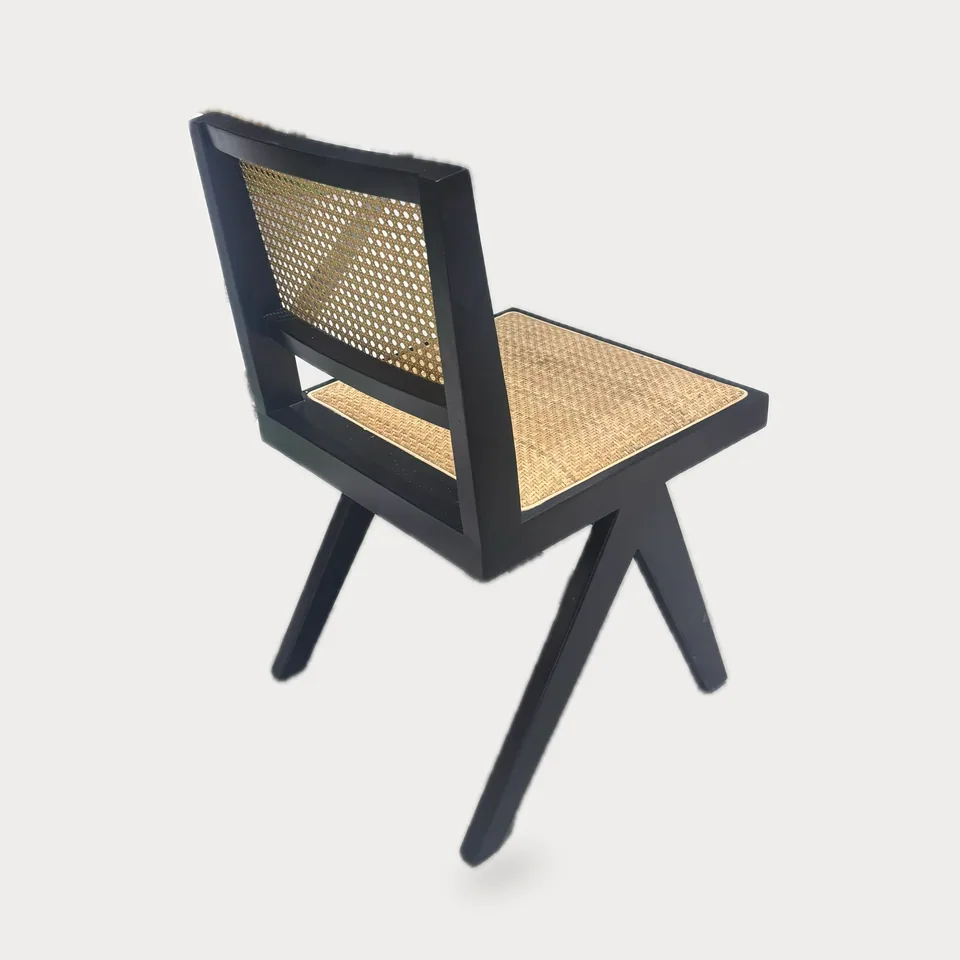
The Ridley uses a mid-century compass-leg frame: on each side, two legs meet in an inverted V, so the chair stands on four feet but reads as two sculptural side frames. Seat and back are both woven cane in black-stained timber frames.
Construction. Solid hardwood throughout, black stain with a protective coat. The side frames are joined with glued mortise-and-tenon joints and connected by front and back rails under the seat. Both cane panels are set into rebated frames and can be re-caned or replaced individually. The splayed feet give a wide footprint, which makes the chair stable on uneven floors.
Where it works. Design-led restaurants, wine bars, hotel lobbies and cafes with a warm modernist palette. Because the seat is unpadded cane, it suits shorter sittings or rooms where you add a loose seat pad.
Options. Black, walnut or natural stain; cane, upholstered or solid wood seat; matching armchair version. The angled legs need about 1 in (2.5 cm) more depth than a straight-leg chair, so allow for this in tight two-top layouts. Cane is a natural material and will vary slightly in tone from panel to panel.